If your Datsun 240Z’s SU carburetors are overflowing fuel, it usually means the float system isn’t shutting off fuel correctly. This is a pretty common issue on these cars, especially if the carbs haven’t been rebuilt in a while. Fortunately, this is something you can fix yourself without too much trouble. In this guide, we’ll walk through how to diagnose the issue and set the float level correctly using the proper specs. This guide is part of ZCarGuide’s Ultimate 240Z Carburetor Guide, so if you’re working through multiple issues, you may want to check that out as well.
Applicable Carburetors
This guide applies to round-top SU carburetors found on early Datsun 240Z models (1970–1972).
We currently do not cover flat-top carburetors here, as they are significantly different and generally more difficult to work with.
Symptoms of Overflowing Carbs
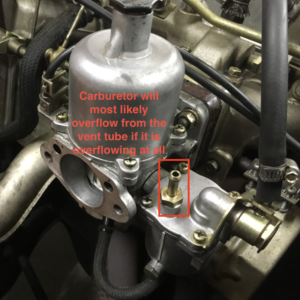

- Fuel leaking from the carburetor or overflow tube
- Strong fuel smell at idle
- Engine running very rich
- Hard starting, especially when warm
If you’re seeing any of these, the float and needle valve are the first things to check.
Why This Happens
Fuel level inside the float bowl is controlled by:
- The float
- The needle valve (needle and seat)
- The float height setting
Overflow happens when:
- The needle valve doesn’t seal
- The float is set too high
- The float is sticking or leaking
Correct Rebuild Kit

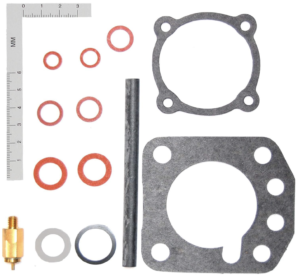
Even if you’re just fixing an overflow issue, it’s usually worth replacing the needle and seat while you’re in there.
Look for a kit that includes:
- Needle valve and seat
- Float bowl gasket
- Seals and O-rings
Step 1: Check the Float
Start by removing the float bowl cover.
Once it’s off:
- Make sure the float moves freely
- Check that it isn’t sticking or binding
- Shake it and listen for fuel inside
If there’s fuel inside the float, it’s bad and needs to be replaced.
Step 2: Inspect the Needle Valve
Remove the needle valve and seat using a socket.
Check for:
- Dirt or debris
- Wear on the needle tip
- Anything preventing it from sealing
Even a small amount of debris can cause fuel to continue flowing and lead to overflow.
If it doesn’t look perfect, replace it. This is one of the most common failure points.
Setting the Float Level
Before reassembling, you need to make sure the float height is set correctly.
For these carburetors:
Float height: 14.0–15.0 mm (0.55 in)
This measurement is taken at the float lever, with the float just closing the needle valve.
A few important notes:
- Do not compress the needle valve spring while measuring
- The float bowl cover should be inverted
- Bend the small metal tab on the float to adjust
If the float height is too high: fuel level rises too much and causes overflow. If you’re unsure, it’s better to be slightly on the lower end of the range.
Needle Valve Clearance
From the factory spec:
Needle valve clearance: 1.5 mm (0.06 in)
If this is off, the valve may not close properly, even if the float height is correct.
Reassembly and Testing
Once everything is set:
- Reinstall the float and cover with a new gasket
- Reconnect fuel lines
- Turn fuel on and observe
You should see:
- Fuel level rises and then stops cleanly
If it continues to rise:
- Needle valve is not sealing
- Float height is still incorrect
- Fuel pressure may be too high
When to Just Rebuild the Carb
If you find:
- Worn needle valve
- Old or brittle gaskets
- Inconsistent float behavior
It’s usually faster and more reliable to install a rebuild kit (our recommended kit here) and reset everything at once.
Final Notes
These carburetors are actually pretty simple once you understand how the float system works.
Almost every overflow issue comes down to:
- Float problem
- Needle valve problem
- Incorrect float height
Get those three right, and the issue is usually resolved.